Featured
Table of Contents
- – The PTSD Situation: When Traditional Therapies...
- – Understanding PTSD Through a Neurobiological Lens
- – Ketamine's System: Targeting the Origin of PTSD
- – Scientific Methods: Exactly How KAP is Carried...
- – The Veteran Population: Unique Considerations
- – Incorporating Several Evidence-Based Methods
- – EMDR Therapy: Accelerated Reprocessing
- – Accelerated Resolution Therapy: Fast Picture ...
- – Interior Family Equipments: Recovering Fragme...
- – Comparing Multi-Modal Strategies to Typical Tr...
- – Combination: The Trick to Enduring Change
- – Safety Profile and Risk Monitoring
- – Long-Term Outcomes: Sustained Alleviation or T...
- – The Future: Expanding Gain Access To and Refin...
- – That Should Take Into Consideration Ketamine-A...
- – Verdict: A Brand-new Chapter in PTSD Therapy
The PTSD Situation: When Traditional Therapies Aren't Enough
Trauma impacts roughly 6% of the united state population eventually in their lives, with even higher prices among battle professionals, first -responders, and survivors of sexual assault. While evidence-based treatments like Cognitive Handling Treatment and Prolonged Direct exposure have actually assisted lots of, as much as 50% of PTSD people do not attain complete remission with these methods. Several quit due to the distress of extended direct exposure to stressful memories, while others total therapy methods yet proceed experiencing incapacitating signs.
The landscape of PTSD therapy has actually continued to be relatively stagnant for decades, with most approaches calling for months or years of weekly sessions. For those dealing with intrusive memories, hypervigilance, headaches, and psychological numbing, this timeline can really feel impossibly long. The suffering doesn't just affect people-- it surges through families, occupations, and areas. Veterans wait months for VA appointments while battling with suicidal ideation. Survivors of assault prevent seeking help due to the fact that they can't encounter continuously recounting their trauma.
Ketamine-Assisted Intensive Retreats stands for a paradigm shift in PTSD treatment, providing the possibility of substantial signs and symptom reduction in weeks instead than years. Early research and scientific reports suggest that ketamine can assist also those that have actually tried several treatments without success, providing hope for a population that has commonly been informed they need to simply "learn to live with" their symptoms.
Understanding PTSD Through a Neurobiological Lens
PTSD is basically a problem of memory consolidation and worry extinction. When trauma takes place, the mind's tension response system floodings with cortisol and adrenaline, creating an indelible imprint of the experience. Usually, the hippocampus would contextualize this memory, basically filing it away as "something poor that occurred in the past." However extreme trauma can overwhelm this system, leaving memories unrefined and fragmented.
The outcome is a brain that can not compare past risk and present security. The amygdala stays hyper, constantly scanning for threats. The prefrontal cortex-- in charge of sensible thinking and emotional law-- becomes underactive, unable to override the alarm signals. Meanwhile, the hippocampus shows minimized quantity in several PTSD people, even more harming the capability to contextualize traumatic memories.
This neurobiological understanding discloses why talk treatment alone frequently has a hard time with PTSD. You can't just reason your way out of a worry action that bypasses mindful idea. The brain needs to re-shape itself at an essential level, creating new neural paths that allow for proper threat analysis and psychological guideline. This is where ketamine's unique device comes to be crucial.
Ketamine's System: Targeting the Origin of PTSD
Ketamine works in different ways than any kind of other psychiatric medicine. As an NMDA receptor antagonist, it blocks glutamate task in details brain regions, momentarily interfering with the inflexible anxiety circuits that identify PTSD. But ketamine does not simply reduce signs and symptoms-- it appears to assist in actual rewiring of semantic networks with boosted neuroplasticity.
Study has revealed that ketamine activates fast synthesis of brain-derived neurotrophic variable (BDNF), a healthy protein necessary for nerve cell growth and connection. Within hours of administration, brand-new synaptic links begin creating in the prefrontal cortex and hippocampus-- the very areas damaged in PTSD. This sped up neuroplasticity produces an important window where healing treatments can be uncommonly reliable.
The dissociative effects of ketamine likewise offer a healing objective in PTSD therapy. By producing psychological distance from distressing material, ketamine allows clients to involve with memories that would certainly or else activate overwhelming anxiety or shutdown responses. This isn't evasion-- it's a healing reframing that makes handling possible. Individuals commonly explain lastly having the ability to "take a look at" their trauma instead than being taken in by it.
Scientific Methods: Exactly How KAP is Carried Out for PTSD
Ketamine-assisted psychiatric therapy for PTSD normally adheres to a structured protocol designed to make best use of security and effectiveness. First sessions concentrate on comprehensive evaluation, consisting of PTSD symptom extent, trauma history, clinical screening, and therapy objectives. Clinicians assess whether clients have appropriate assistance systems and stable living scenarios, as trauma job can momentarily boost emotional susceptability.
The ketamine administration stage varies by setting and clinician preference. Some programs utilize intravenous infusions at sub-anesthetic doses (0.5 mg/kg over 40 mins), while others prefer intramuscular shots or sublingual lozenges. Each shipment approach has advantages: IV permits for exact dose control and quick change, IM generates even more trusted absorption, and sublingual deals non-invasive administration though with less foreseeable bioavailability.
Throughout the medicine session, individuals recline in a comfortable setting with minimal external excitement. Music, eyeshades, and dark lights aid promote an internal focus. Therapists continue to be existing however greatly non-directive during the peak impacts, permitting individuals' internal recovery procedures to unfold normally. The healing job magnifies throughout integration sessions that adhere to, where insights and experiences from the medication state are refined and connected to day-to-day life.
Most PTSD procedures include six to 8 sessions over three to 6 weeks, though some extensive programs press this timeline right into 1 or 2 weeks. The frequency appears crucial-- sessions spaced also much apart may not maximize ketamine's neuroplastic home window, while sessions too close with each other might not permit appropriate assimilation time.
The Veteran Population: Unique Considerations
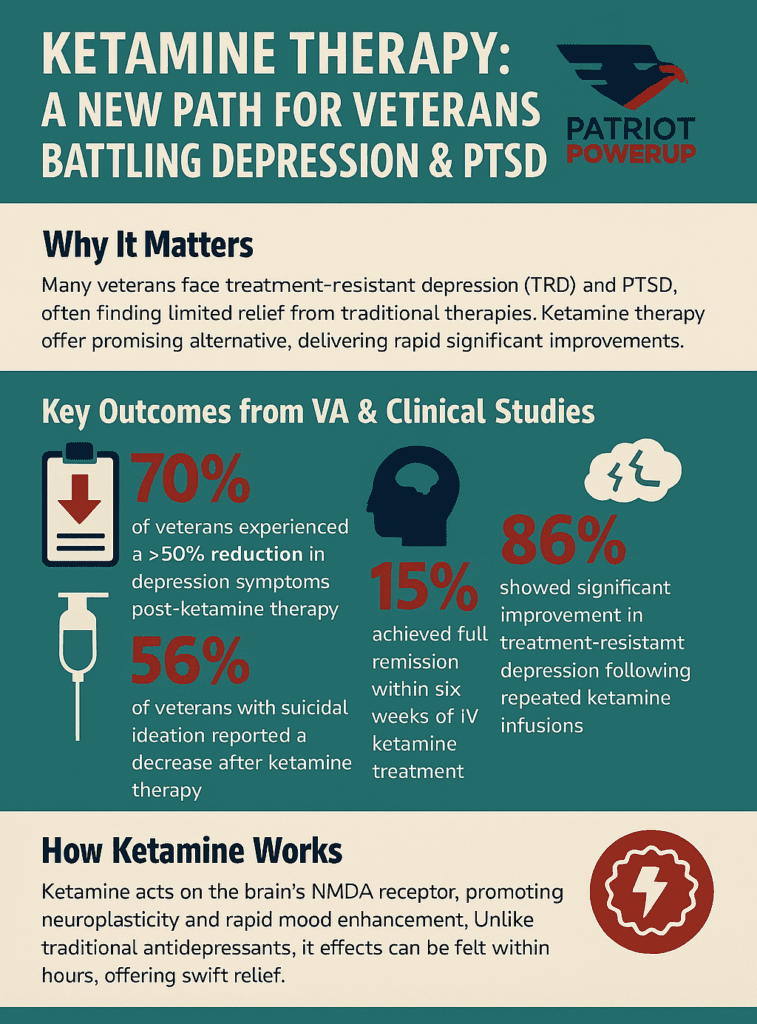
Army professionals represent one of one of the most researched populations for ketamine-assisted PTSD treatment, and forever factor-- conventional treatments have commonly failed this group. Fight trauma generally involves repeated direct exposure, moral injury, stressful mind injury, and complex grief, creating a professional picture a lot more tough than single-incident PTSD.
Professionals additionally encounter unique barriers to standard treatment. Numerous military cultures stigmatize psychological healthcare or view seeking aid as weakness. Long term Direct exposure treatment needs in-depth recounting of terrible experiences, which can feel intolerable for those currently fighting with intrusive memories. High failure prices plague VA PTSD programs, with many professionals biking through several failed treatment attempts prior to finding relief.
Ketamine-assisted extensive retreats attend to several of these difficulties. The clinical structure can really feel more acceptable than "mental health and wellness treatment" for those uneasy with standard treatment. The reasonably quick procedure respects veterans' time and reduces dropout danger. Perhaps most significantly, ketamine's dissociative barrier permits handling of battle memories without the frustrating distress that creates numerous to abandon therapy.
Research specifically analyzing ketamine for combat-related PTSD has actually revealed appealing results. A 2014 research located that 6 ketamine infusions generated significant decreases in PTSD signs and symptoms, with some enhancements persisting months after treatment. Anecdotal records from specific programs dealing with veterans describe transformative outcomes, including experts finally able to sleep with the evening, reconnect with family members, and reclaim their lives after years of suffering.
Incorporating Several Evidence-Based Methods
One of the most efficient ketamine programs for PTSD do not rely upon medicine alone. By combining ketamine with well-known trauma therapies, intensive retreats develop synergistic impacts that exceed what any solitary treatment might complete.
EMDR Therapy: Accelerated Reprocessing
EMDR Treatment Intensives has emerged as a powerful enhance to ketamine therapy. EMDR uses reciprocal stimulation-- commonly eye motions, taps, or tones-- to trigger the mind's natural info processing system. When combined with ketamine's neuroplastic impacts, EMDR can function remarkably quickly, enabling individuals to reprocess terrible memories that have actually been stuck for years or decades.
The ketamine state appears to lower the defensive barriers that in some cases slow-moving EMDR development. Clients report having the ability to gain access to terrible product extra easily while maintaining adequate emotional distance to process it securely. Some programs deliver EMDR sessions during the combination phase following ketamine management, taking advantage of the boosted neuroplasticity home window. Others use consecutive sessions, rotating between ketamine and EMDR days throughout the intensive therapy duration.
Accelerated Resolution Therapy: Fast Picture Change
Accelerated Resolution Therapy (ART) provides one more powerful tool for PTSD therapy within ketamine programs. ART makes use of eye movements comparable to EMDR yet with distinctive protocols concentrated on volunteer image replacement. The treatment helps clients transform upsetting stressful images right into even more neutral or favorable organizations, often in simply one to 5 sessions.
When incorporated with ketamine therapy, ART ends up being especially reliable at attending to certain distressing images or scenes that surface during medicine sessions. The ketamine experience may bring forward visual memories or fragmented trauma content that ART can then help process and transform. This combination permits both deep expedition throughout ketamine sessions and targeted resolution of particular traumatic web content throughout artwork.
Interior Family Equipments: Recovering Fragmented Parts
Interior Household Solutions Treatment (IFS) gives an unique framework for understanding PTSD as a condition of inner fragmentation. Trauma produces "components" within the subconscious-- some that lug distressing memories, others that shield against frustrating pain, and still others that attempt to handle daily performance. These components commonly contravene each various other, developing the inner chaos characteristic of PTSD.
Ketamine appears to facilitate access to what IFS calls "Self-energy"-- a state of calmness, thoughtful, curious recognition. From this viewpoint, people can develop connections with their traumatized components, recognize their protective devices, and ultimately help these parts heal and incorporate. Many clients report that ketamine sessions allow them to connect with components they've never ever accessed before, resulting in extensive shifts in self-understanding and sign relief.
Comparing Multi-Modal Strategies to Typical Treatment
Conventional PTSD treatments commonly involve once a week sessions of a single modality-- Extended Exposure, Cognitive Processing Therapy, or medicine management. While these strategies assist numerous people, they have significant limitations. Weekly spacing indicates slow progression, single-modality treatment might miss out on crucial elements of trauma, and the extended timeline can result in failure or demoralization.
Ketamine-assisted extensive retreats that integrate several techniques use numerous advantages. The compressed timeline-- typically one to 2 weeks of daily sessions-- keeps restorative momentum and protects against the regression that can take place between widely-spaced appointments. The mix of ketamine with EMDR, ART, and IFS addresses trauma from several angles: neurobiological (ketamine), memory reprocessing (EMDR), picture makeover (ART), and components work (IFS)
This multi-layered strategy recognizes that PTSD is itself diverse. Some elements respond much better to somatic interventions, others to cognitive restructuring, and still others to parts function or spiritual assimilation. By offering numerous therapeutic devices within a concentrated timeframe, intensive programs can adjust per patient's unique discussion and demands.
Combination: The Trick to Enduring Change
The ketamine experience itself is not the cure for PTSD-- combination changes short-term understandings right into irreversible modification. Throughout medication sessions, clients frequently experience extensive realizations, psychological launches, or shifted viewpoints on their trauma. Without correct assimilation job, these experiences can discolor like desires upon waking.
Efficient assimilation entails several components. Verbal handling with a therapist assists articulate and combine insights from ketamine sessions. Somatic practices like yoga exercise, breathwork, or body-based treatment assistance regulate the anxious system and procedure trauma kept in the body. Journaling captures experiences while they're fresh and tracks patterns throughout sessions. Mindfulness practices help keep the viewer perspective that ketamine assists in.
Making use of corresponding therapies during integration strengthens the job started during ketamine sessions. IFS aids clients develop compassionate connections with distressed parts of themselves, while ART can swiftly refine particular traumatic images that surface. EMDR sessions might be arranged for assimilation days, permitting methodical reprocessing of stressful memories while the brain remains in an enhanced neuroplastic state.
Integration additionally deals with practical matters-- just how will life change as PTSD symptoms diminish? Patients that have actually arranged their entire presence around staying clear of triggers must learn to re-engage with the globe. Those whose identification became linked with their trauma should discover that they are past "survivor" or "target." Relationships may require renegotiation as emotional availability rises and hypervigilance decreases.
Safety Profile and Risk Monitoring
Ketamine has actually been used as a medical anesthetic for over half a century with an outstanding safety record. At the sub-anesthetic dosages utilized in psychiatric therapy, significant damaging events are uncommon. Common short-term negative effects include dissociation (which becomes part of the healing effect), mild increases in high blood pressure and heart price, nausea, and dizziness.
Cardiovascular worries stand for the primary clinical contraindication. People with uncontrolled high blood pressure, recent cardiovascular disease, or serious heart illness might not be prospects. For the majority of people, vital indicators return to baseline within 30-60 minutes of administration. Continual monitoring throughout sessions ensures any type of worrying changes are caught instantly.

Emotional risks need careful administration. Ketamine can briefly raise dissociation, which could be problematic for patients with dissociative conditions. Those with active psychosis or mania usually ought to not receive ketamine. A small percent of individuals experience challenging or frightening experiences throughout sessions, though proficient therapists can generally assist patients navigate these productively.
Misuse possible exists, specifically for those with material use condition backgrounds. Medical ketamine protocols differ considerably from recreational usage-- monitored administration, therapeutic setup, and assimilation work prevent the pattern of rising solo use that identifies dependency. Still, programs carefully screen applicants and display for indications of problematic usage.
Long-Term Outcomes: Sustained Alleviation or Temporary Renovation?
One sixty-four-thousand-dollar question stays incompletely addressed: do enhancements from ketamine-assisted PTSD therapy last? The majority of research has complied with people for only three to six months post-treatment, revealing generally sustained benefits but with some symptom return in time. Some people preserve gains forever after a solitary treatment course, while others need routine "booster" sessions.
Variables affecting longevity appear to consist of integration high quality, ongoing life stressors, extra trauma exposure, and individual neurobiological differences. Those who continue treatment, keep encouraging relationships, and practice abilities learned during treatment have a tendency to maintain renovations better than those that check out ketamine as a single fix.
Some programs suggest maintenance sessions every few months, comparable to how depression patients could obtain continuous ketamine therapies. Others concentrate on extensive assimilation support during the acute therapy phase, after that graduate individuals to standard therapy or peer assistance. Optimal upkeep approaches remain an active location of research study and professional technology.
Unscientific reports include exceptional tales: combat experts returning to function after years of handicap, assault survivors finally able to maintain intimate relationships, initial -responders resting with the evening without nightmares for the very first time in years. While specific experiences differ, the constant motif is fast, considerable renovation in functioning and lifestyle.
The Future: Expanding Gain Access To and Refining Procedures
Ketamine-assisted psychiatric therapy for PTSD stands at an inflection point. Early adopters have actually demonstrated feasibility and guarantee, yet prevalent application encounters hurdles. Expense stays excessive for lots of-- programs can charge $3,000-$ 10,000 for treatment training courses, rarely covered by insurance coverage. Geographic accessibility is limited, with a lot of programs focused in urban areas or specialized centers.
Regulatory concerns persist. While ketamine is FDA-approved as an anesthetic, its usage for PTSD is off-label. Insurance coverage firms resist insurance coverage without more considerable regulated tests. Some medical professionals supply ketamine mixtures for anxiety (somewhat better studied) and provide psychiatric therapy separately, navigating gray areas in invoicing and documentation.
Research study is broadening rapidly. Multiple medical trials are analyzing ketamine specifically for PTSD, contrasting it to developed therapies, and exploring optimal application and regularity. Studies checking out combination strategies-- ketamine plus EMDR, ketamine plus IFS, ketamine plus digital truth direct exposure-- might expose synergistic effects that become the brand-new requirement of care.
As proof builds up and methods become standard, ketamine-assisted intensive retreats may shift from experimental treatment to mainstream alternative. Training programs are arising to educate clinicians just how to safely and effectively provide ketamine-assisted therapy. Expert organizations are creating practice standards. The trajectory suggests that within five to ten years, this strategy might be as accepted for PTSD as EMDR is today.
That Should Take Into Consideration Ketamine-Assisted Psychotherapy?
Ketamine-assisted intensive retreats may be especially proper for individuals that have actually tried traditional PTSD treatments without appropriate alleviation. Those that completed Long term Direct exposure or CPT however still have problem with considerable signs represent ideal candidates. Experts that discovered conventional therapy too traumatic to finish could endure the accelerated, buffered technique ketamine offers.
Patients with intricate PTSD-- including numerous injuries, usually from childhood years-- might take advantage of ketamine's capacity to gain access to preverbal and deeply hidden material. Those with co-occurring depression together with PTSD could experience improvement in both problems, as ketamine has solid antidepressant impacts independent of its trauma-processing advantages.
Ketamine treatment isn't for every person. Those unpleasant with altered states of consciousness, lacking adequate support group, or taking care of energetic chemical abuse may not appropriate candidates. People require realistic expectations-- ketamine promotes recovery yet isn't a miracle drug. The job of handling trauma and restoring life still occurs mostly throughout assimilation.
The decision to go after ketamine-assisted intensive therapy must include complete examination with qualified suppliers who can evaluate relevance, explain threats and advantages, and describe what therapy would involve. Lots of people gain from trying recognized treatments initially, transforming to ketamine only if conventional techniques verify inadequate. Others, encountering extreme signs and symptoms and minimal time, may fairly pick to access ketamine previously in their treatment trip.
Verdict: A Brand-new Chapter in PTSD Therapy
Ketamine-assisted psychiatric therapy represents one of the most significant breakthroughs in PTSD therapy in years. By integrating neuroscience-informed medicine with competent psychiatric therapy and evidence-based methods like EMDR, ART, and IFS, this technique addresses both the biological and psychological dimensions of trauma. The possibility of purposeful enhancement in weeks rather than years uses intend to those who have actually endured for also long.
As study progresses and professional experience accumulates, protocols will proceed advancing. Concerns regarding optimal dosing, session frequency, integration approaches, and upkeep strategies will certainly be responded to via strenuous research study and thoughtful clinical technology. What stays clear is that ketamine has actually opened brand-new possibilities for PTSD treatment, especially for those failed by traditional strategies.
For the millions living with PTSD-- checking departures in every space, shocking at abrupt noises, unable to really feel secure also in their own homes-- ketamine-assisted intensive retreats use a course ahead. Not a miracle treatment, however a powerful tool that, when possessed skillfully within a detailed therapy technique, can help redeem lives from the grip of trauma. The future of PTSD treatment is evolving, and ketamine-assisted psychiatric therapy stands at the leading edge of that advancement.

Table of Contents
- – The PTSD Situation: When Traditional Therapies...
- – Understanding PTSD Through a Neurobiological Lens
- – Ketamine's System: Targeting the Origin of PTSD
- – Scientific Methods: Exactly How KAP is Carried...
- – The Veteran Population: Unique Considerations
- – Incorporating Several Evidence-Based Methods
- – EMDR Therapy: Accelerated Reprocessing
- – Accelerated Resolution Therapy: Fast Picture ...
- – Interior Family Equipments: Recovering Fragme...
- – Comparing Multi-Modal Strategies to Typical Tr...
- – Combination: The Trick to Enduring Change
- – Safety Profile and Risk Monitoring
- – Long-Term Outcomes: Sustained Alleviation or T...
- – The Future: Expanding Gain Access To and Refin...
- – That Should Take Into Consideration Ketamine-A...
- – Verdict: A Brand-new Chapter in PTSD Therapy
Latest Posts
Starting Care With a Dialectical Behavior Therapy (DBT) Provider
Stress-Related Symptoms Rooted in Nervous System Activation
Typical Misconceptions About KAP Treatment Explained
More
Latest Posts
Starting Care With a Dialectical Behavior Therapy (DBT) Provider
Stress-Related Symptoms Rooted in Nervous System Activation
Typical Misconceptions About KAP Treatment Explained